
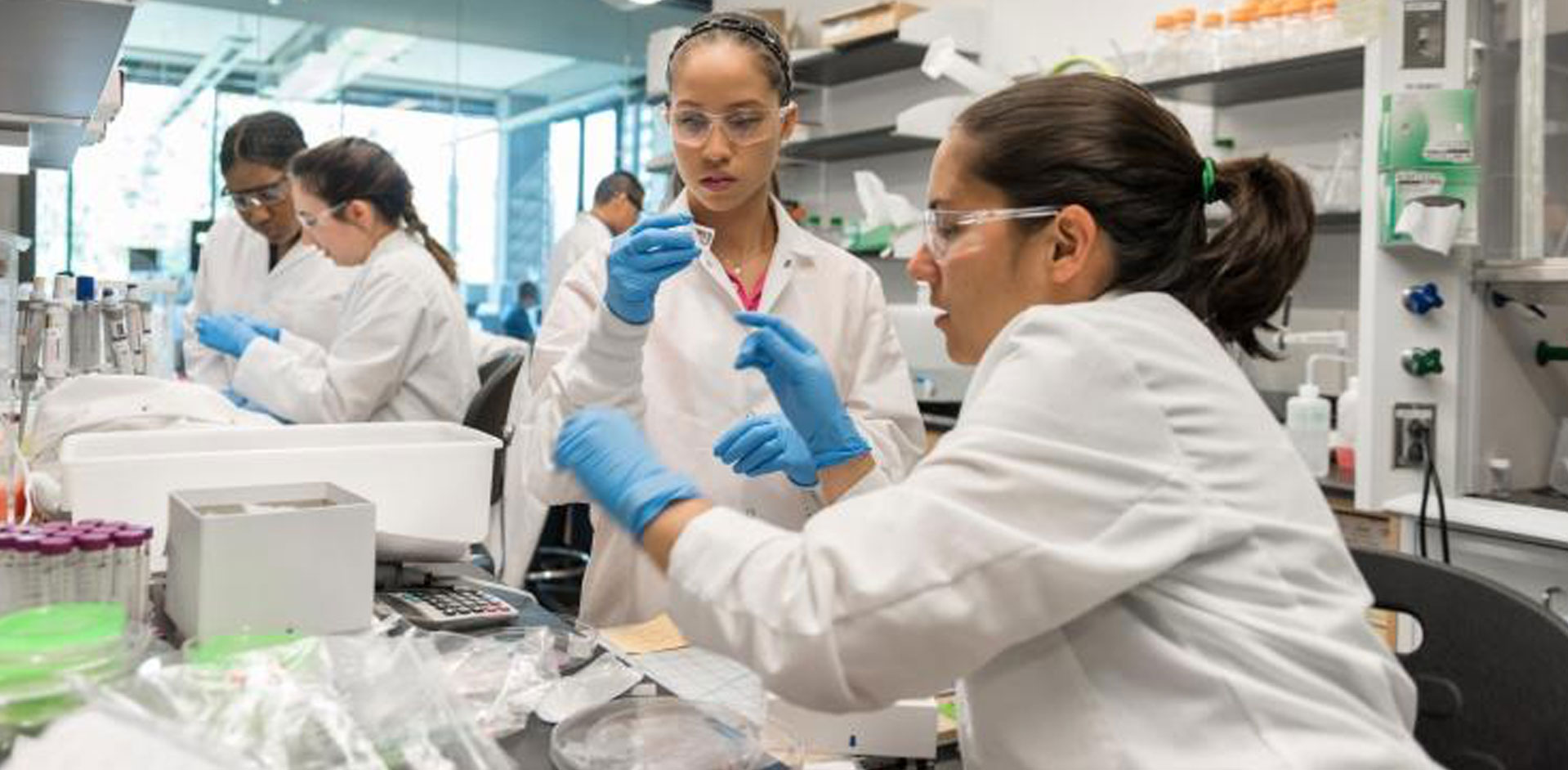

Imagine a world where doctors could tailor genetic treatments to individuals, alleviating pain and improving quality of life for patients worldwide. This imaginary world is becoming reality thanks to work from researchers like Krishanu Saha from University of Wisconsin-Madison, who contributed her expertise to a recent article in The Atlantic about the subject.
CRISPR gene editing has already been used to treat some rare genetic mutations, and with each "template" that is created, treatments become safer and more accessible. Read an excerpt below and follow the link for the full article:
For a decade after its discovery, CRISPR gene editing was stuck on the cusp of transforming medicine. Then, in 2023, scientists started using it on sickle-cell disease, and Victoria Gray, a patient who lived with constant pain—like lightning inside her body, she has said—got the first-ever FDA-approved CRISPR gene-editing treatment. Her symptoms vanished; so did virtually everyone else’s in the clinical trial she was a part of.
This year, the technology has started to press beyond its next barrier. Most of the 8 million people globally who have sickle-cell disease share the same genetic mutation; treating rare disorders will require dealing with many different mutations, even within the same disease. And although rare diseases affect 30 million Americans in total, relatively few people are diagnosed with each one. Fyodor Urnov, a scientific director of UC Berkeley’s Innovative Genomics Institute (IGI), showed me a list of rare diseases and pointed to one carried by only 50 people. “Who’s going to work on a disease with 50 patients?” he asked. And even within one disorder, each person might need their own customized CRISPR treatment. Drug developers have little financial incentive to spend years and millions of dollars designing therapies that may need to be tailored to literally one person.
The technology is ready to treat at least some of these diseases, though. “There’s a whole toolbox now that can target arguably any part of the genome pretty precisely,” Krishanu Saha, a gene-editing researcher at the University of Wisconsin at Madison, told me. If researchers could build one CRISPR platform for a single disease, or even several similar ones, and tweak that template to suit each patient, they could target extremely rare disorders more quickly and economically. Maybe the first patient’s treatment for a disease takes $2 million and a year of development; by the third patient, the cost should be down to, say, $100,000 and a month of development, Urnov said, because you’ve already proved that the reused components are safe.